
Generator Pre-Purchase Inspection: A Checklist to Take to the Yard
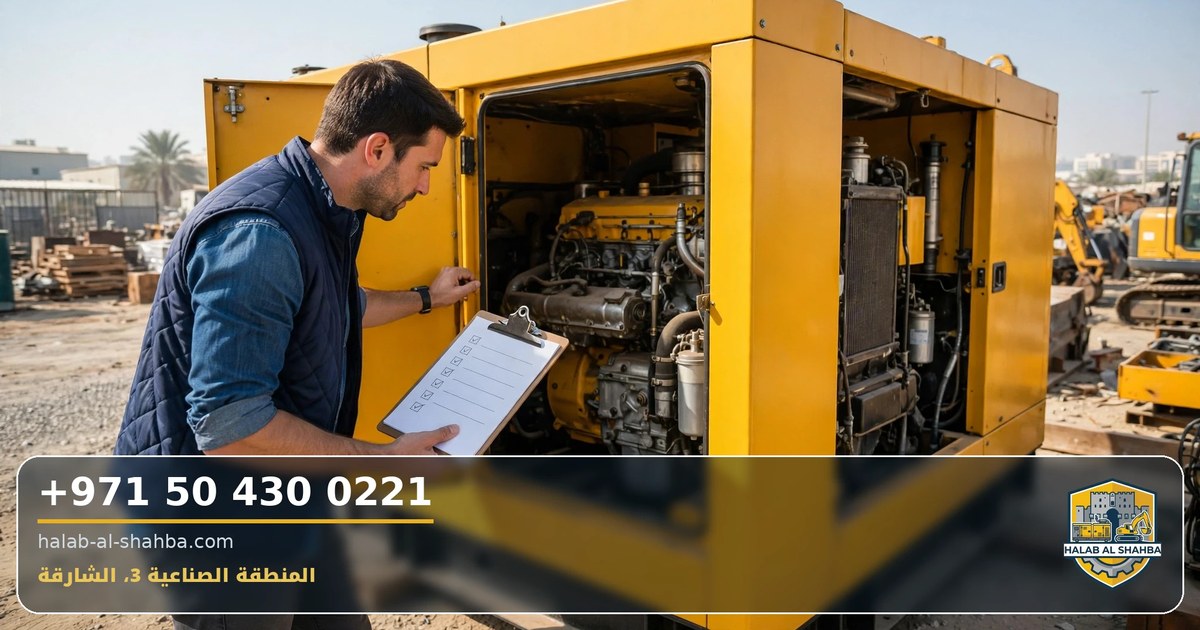
Inspect any used generator before paying in four steps: the data plate and hour meter, fluids and leaks, starting and listening, and a real load test. A ready checklist to take to any yard in the UAE.
Short answer: inspecting a generator before you buy means four steps: read the data plate and the hour meter, check the fluids and leaks, start the set and listen to it, and test it under a real load of at least about half its rating. A generator that fails any of these steps is not worth buying, however tempting the offer.
Buying a used generator in the UAE is an excellent deal when done right, and an expensive mistake when bought blind. One hour of inspection at the yard is what separates the two. This checklist follows the same inspection sequence we recommend to any customer visiting us in Industrial Area 3, Sharjah, and you can apply it to any set at any yard.
First: before you go to the yard
- Agree with the seller in advance that starting and load testing are part of the visit; a seller who refuses the test has saved you a trip.
- Bring a flashlight, gloves, a white cloth for the oil check, and your phone to photograph the data plate and hour meter.
- Schedule the visit in daylight and allow at least 30–45 minutes of running; a ten-minute look proves nothing.
- If the yard's available load is limited, ask about a load bank or a proper load test at the seller's site.
Second: the data plate and hour meter — the generator's identity
The data plate is the set's birth certificate: manufacturer, model, serial number, KVA rating, voltage and frequency. Photograph it and compare its serial number with the one stamped on the engine itself; mismatched numbers are a red flag.
Then look at the hour meter:
- Very low hours on an old model can mean a replaced meter or years of standing — and long standing is an enemy too.
- Compare the hours with the set's general condition: rusty bolts and worn panels next to a meter claiming 500 hours do not add up.
- Ask when it last ran under load; a set that runs weekly is usually in better shape than one untouched for two seasons.
Third: the visual check — fluids, leaks and rust
Before any start, walk a full circle around the set and open the doors:
- Oil: pull the dipstick and wipe it on the white cloth. Very black, watery oil means long neglect; a strong burnt smell deserves a pause.
- Coolant: open the radiator cap carefully, with the engine cold. The fluid should be clean and its normal colour; rust or an oil film on top means a problem is near.
- Leaks: look under the set and around filters and hoses. Old, baked-on oil or diesel stains mean a chronic leak nobody fixed.
- Hoses and wiring: cracked hoses and wires patched randomly with tape tell the seller's whole maintenance story.
- Batteries: heavily corroded terminals and loose cables mean morning starting trouble is part of the deal.
Fourth: roughly normal readings during the test
While running under load, compare the panel readings with these approximate guide values (they vary slightly by model):
| Reading | Roughly normal | Danger sign |
|---|---|---|
| Output voltage (three-phase) | About 400 V | Constant fluctuation or a clear drop under load |
| Frequency | Steady 50 Hz approximately | Rising and falling as load changes |
| Coolant temperature after 20–30 min of load | Roughly 75–95 °C | Climbing continuously toward boiling |
| Oil pressure while running | Steady, within the maker's range usually | Dropping as the engine warms, or a warning light |
| Exhaust smoke under load | Light and usually clearing | Continuous thick black, or blue |
Fifth: starting and listening — your ears are an inspection tool
Start the set cold if you can; a cold start reveals what a warm one hides.
- Repeated hard starting or a large white smoke cloud at start can point to injector or compression issues.
- Regular metallic knocking, an unusual whine, or vibration that grows with load are sounds you should not be hearing.
- Watch the exhaust at start and under load: brief light black smoke at the moment of loading is usually normal; continuous smoke is not.
- Let the set run at least 20–30 minutes; heat and leak faults do not show up in five minutes.
Sixth: the load test — the decisive check
This is the most important step of any pre-purchase inspection, and the one most buyers skip. A generator running unloaded proves nothing; its real capacity shows when it works.
- Raise the load gradually to at least 50–75% of the rated KVA and stay there for 20 minutes.
- Watch voltage and frequency stability as loads are added and removed; a healthy set recovers quickly without sagging.
- Monitor temperature and oil pressure throughout, then open the doors afterwards and look for a fresh leak that heat and pressure exposed.
- If a proper load is impossible at the yard, make the full test a written condition before final payment, or pay a deposit conditional on its result.
The inspection checklist — take it with you to the yard
- ☐ Photo of the data plate + serial number matched on the engine
- ☐ Hour-meter reading compared with the model year and general condition
- ☐ Oil colour, viscosity and smell checked on the white cloth
- ☐ Coolant clean, with no oil or rust in it
- ☐ No leaks under the set or around filters and hoses
- ☐ Hoses, wiring, batteries and terminals in sound condition
- ☐ Cold start on the first or second attempt, usually
- ☐ No metallic knocking, excess vibration or continuous smoke
- ☐ Load test at 50–75% for at least 20 minutes
- ☐ Voltage and frequency steady, temperature normal throughout
- ☐ No new leaks after the test and no warning lights
- ☐ Written agreement for the full test if the yard cannot provide it
Common buyer mistakes we see
The biggest is inspecting by eye alone and accepting a five-minute unloaded run. The second is being fooled by fresh exterior paint; a canopy is repainted in a day, an engine is not renewed by paint. The third is never asking "why are you selling?" — the answer alone sometimes reveals half the truth. The fourth is paying in full before the load test because "another buyer is coming"; the market is full of generators, and your money is paid once.
How we help at Halab Al Shahba
At Halab Al Shahba Trucks & Heavy Equipment Trading, we stock generators from 15 to 1500 KVA at our yard in Industrial Area 3, Sharjah, and we open any set for your inspection, starting and load testing in front of you — that is your right as a buyer, not a favour from us. Browse the available generators before your visit, or check our contact page for the address and working hours, and take your time inspecting; our team is there for any technical question during your test, with 24/7 technical support after the sale.
FAQ
How long should I test a generator before buying?
At least 20–30 minutes under a real load of roughly half the rating or more. A short unloaded run does not expose temperature, oil-pressure or leak faults — usually the most expensive ones to fix.
What is the most important number to verify at the yard?
Two, in truth: the serial number on the data plate matched against the engine, and the hour-meter reading compared with the set's general condition. A mismatch in the first or a contradiction in the second is reason enough to stop the deal.
Do I need to bring a technician with me?
If the rating is large or the deal is significant, usually yes — one day of a technician's time is far cheaper than an engine repair. If you buy from a trusted yard that allows a load test and answers your questions, the checklist above is enough for a sound first inspection.
The generator ran perfectly unloaded — is that enough?
No. Many faults — overheating, voltage drop, pressure leaks — only appear under load. The loaded test is the step that separates a real inspection from a walk-around.
What if the seller refuses a load test?
Treat the refusal as an answer in itself. A seller confident in his set does not fear testing it. Make the test a written condition before payment, or move to another unit; the market is full of alternatives.